Insights·4 August 2026·9 min read
The Quote You Sent Into Silence
You walked the job, priced it carefully, hit send — and heard nothing. Most quotes don't die on price; they die in silence. Here's the simple follow-up system Canterbury businesses use to win jobs they've already done the work for.

You know this one. Tuesday afternoon you drove out to the job, walked it with the customer, measured up, talked through what they wanted. That evening — after your actual work day — you sat down and priced it properly: materials, hours, the margin that makes it worth doing. Wednesday morning you sent it off with a friendly line or two. They said they were keen. They said they'd have a read and get back to you.
It's now the following Friday, and you've heard nothing. Not a no. Not a "we went with someone else." Just nothing. And here's the question that matters: what did you do about it? If you're like most small business owners, the honest answer is nothing — you noticed the silence, felt a bit annoyed, assumed they weren't interested, and moved on to the next job. That assumption is quietly costing you some of the easiest revenue you'll ever not earn.
The quote is your most expensive message — and your most abandoned one
Add up what that quote actually cost you. The drive out and back. The hour on site. The evening at the kitchen table working out the price. Call it three or four hours of your time — time you could have billed somewhere else. For a lot of trades and service businesses, quoting is the single biggest chunk of unpaid work in the week.
Now look at what happens after you hit send. For most businesses: nothing, ever again. The message you invested the most in gets exactly zero follow-through. Compare that to how you treat a $200 unpaid invoice — reminders, phone calls, mild outrage. Yet a $15,000 quote can vanish into silence and we just... let it. Not because the job doesn't matter, but because chasing an invoice feels like your right, and chasing a quote feels like begging. That feeling is worth examining, because it's wrong — and it's expensive.
Silence is almost never a no
Here's what the silence usually looks like from the other side. Your customer opened the quote on their phone in the school pickup line, meant to talk it over with their partner that night, and then the week happened. It's not that they chose someone else. It's that choosing anything fell off the list. Kitchen renovations, new decks, rewiring — these are decisions people circle for weeks, and your quote is sitting in the same inbox as their power bill and forty other things they also haven't dealt with.
Some of them are comparing quotes and waiting on a slow competitor. Some got spooked by the number and need a fortnight to make peace with it. Some genuinely lost your email. Very few of them have actually decided against you — but every day of silence makes it more awkward for them to reply, too. After two weeks, getting back to you feels like apologising. So the deal doesn't die because anyone said no. It dies of embarrassment, on both sides. A follow-up isn't pestering that person. It's rescuing them.
A follow-up isn't pestering that person. It's rescuing them.
"I don't want to be pushy" is a story you tell yourself
Almost every owner we talk to says a version of the same thing: if they wanted it, they'd reply. I don't want to hassle people. It sounds like good manners. In practice it's a story that lets you avoid a slightly uncomfortable task — and it hands the job to whoever isn't telling themselves the same story.
Because think about what a follow-up actually is from the customer's side. They asked you for a price. You gave them one. Checking in a few days later to ask if they've got any questions isn't a sales tactic — it's finishing the conversation they started. Nobody has ever described a builder as "pushy" for one polite message after a site visit. What customers actually report is the opposite: the tradesperson who follows up reads as organised, and the one who doesn't reads as busy, indifferent, or possibly not that keen on the job. You already know the fastest reply usually wins the enquiry. The same logic runs all the way through the sale: the business that stays in the conversation is the business that gets the yes.
What a follow-up that wins jobs actually says
The good news is that this doesn't require a script from a sales course, and it definitely doesn't require becoming someone you're not. A follow-up that works is short, warm, and useful. Something like: "Hi Sarah — just checking the quote came through okay for the deck. Happy to talk through any of it, or adjust the scope if the number's not where you hoped. No rush either way."
Notice what that message does. It gives them an easy way back into the conversation without admitting they went quiet. It opens the door to a scope conversation — which matters, because plenty of "too expensive" objections are really "can we do a smaller version first?" conversations that never happen. And it stays generous in tone: no pressure, no countdown, no "just bumping this." One message like that around day three, and one more about a week later — "No stress if the timing's not right — the quote's good for 30 days if things change" — is the whole system. Two touches. If there's still silence after that, now you've earned the right to move on, because now the silence actually means something.
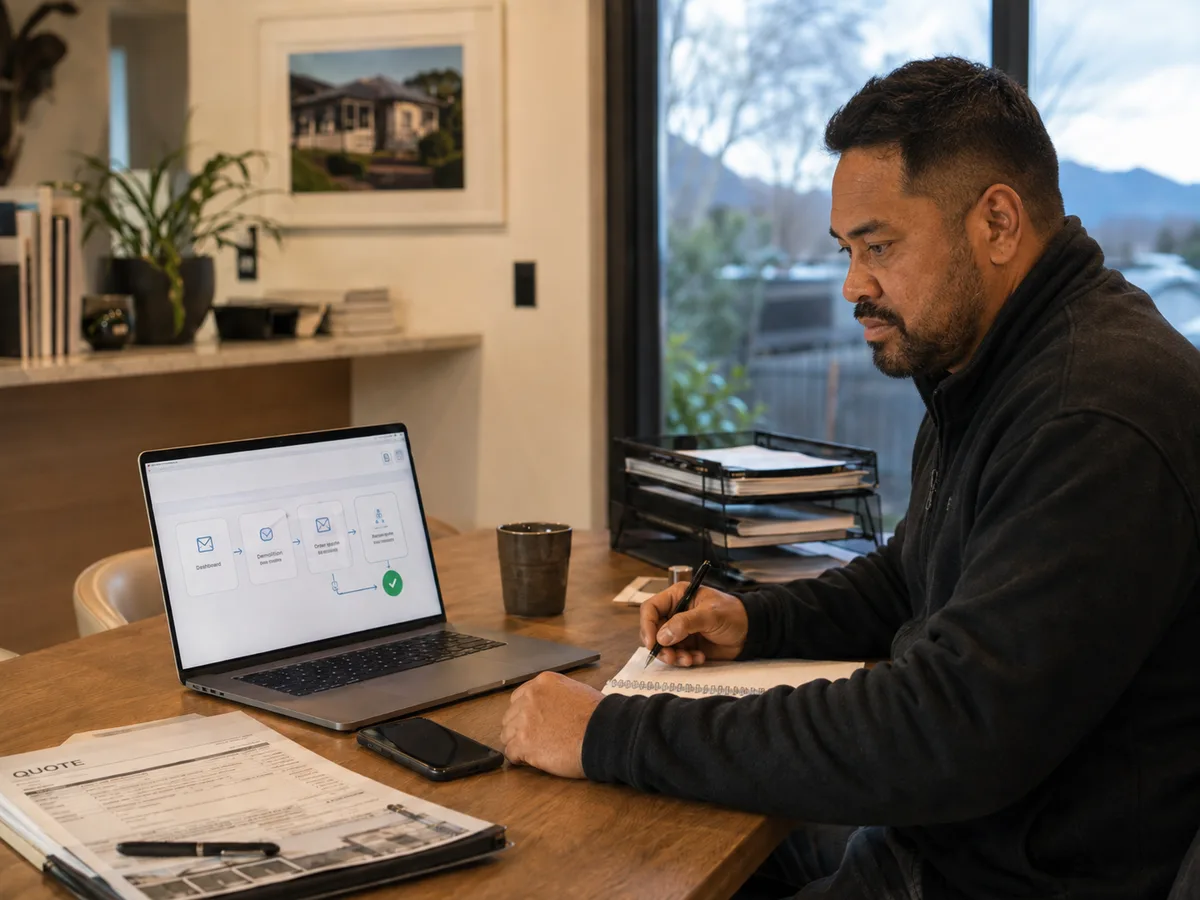
The fix isn't remembering — it's a system that doesn't have to
Here's where most owners go wrong with this advice: they agree with all of it, resolve to follow up from now on, and it lasts eleven days. Not because they're lazy — because follow-ups come due at the exact moment you're busiest. The quote you sent Wednesday needs chasing on Saturday, when you're on a roof. Willpower loses that fight every single time, and it should. This was never a discipline problem. It's a decision you make the same way every time, which means it shouldn't live in your head at all.
So take it out. Write your two follow-up messages once — your words, your tone, the way you'd actually say it. Then put them into a simple system: quote goes out, day-three message follows automatically, day-ten message follows if there's still no reply, and anyone who responds drops out of the sequence instantly so nobody ever gets chased after saying yes. That's not enterprise software; it's an afternoon of setup with tools most businesses already half-own. From that day on, every quote you send gets professionally followed up — including the ones you send in your busiest week of the year, which are exactly the ones you'd never have chased by hand.
Willpower loses that fight every single time, and it should.
The cheapest growth you'll find this year
Stand back and look at what this one change does to the numbers. No extra advertising. No new leads needed. No extra site visits. Just a percentage of the quotes you already wrote — jobs where the customer already met you, already liked you enough to ask for a price — turning into yeses because the conversation didn't die in an inbox. If you quote a few jobs a week, one extra win a month from follow-ups alone is a conservative expectation, and you can do your own maths on what your average job is worth.
That's the pattern with most of what we build: the money usually isn't in doing more — it's in stopping the leaks in what you already do. This is one of the widest leaks going, and one of the cheapest to close. This week, before any system exists, do it manually once: find the last quote that went quiet, and send the day-three message above. Worst case, you get a no you'd already assumed. Best case, you just got paid for an email.
Frequently asked questions
Around two to three days for the first check-in — soon enough that the job's still on their mind, late enough that they've had a real chance to read it. A second, softer message about a week later catches the people whose life got in the way. Faster than that risks feeling eager; slower, and the awkwardness of the silence has already set in.
Two is the sweet spot for most jobs — a check-in and a no-pressure closer. Past that, returns drop fast and the pushy feeling you're worried about becomes real. The point of a system isn't to chase forever; it's to make sure every quote gets those two touches instead of none.
Ask yourself when a business last followed up with you and you thought "desperate" — it almost never happens. What customers actually register is that you're organised and you wanted the job. Desperate is a discount nobody asked for; a polite question three days later is just professional.
Then the follow-up did its job — you're in a conversation instead of a silence, and price talk you can work with. Sometimes the cheaper quote covers less, and walking through the difference wins it. Sometimes a smaller scope fits their budget now with the rest later. You can't have either conversation with someone who never replied.
Mainland Growth Partners helps South Island business owners win back their time and grow their revenue — including the quiet follow-up systems that turn quotes you've already written into jobs. Want to know how many of yours are dying in silence? Let's have a chat.
30 minutes · no obligation · your three biggest leaks, priced in dollars. Or see our pricing first.
Related reading
- The 11-Hour Reply That Cost You the Job — the same leak, one step earlier: speed wins the enquiry before the quote is ever written.
- If You Went Off-Grid for Two Weeks, What Would Break? — why decisions you make the same way every time, like the quote follow-up, belong in systems instead of your head.
Stop losing customers you've already won.
The free Growth Leak Checklist shows the four places small businesses quietly lose customers — and how to plug each leak in minutes. Plus a practical growth note about once a month.